Excellent CKAD Latest Exam Test Covers the Entire Syllabus of CKAD
Wiki Article
BONUS!!! Download part of ExamDumpsVCE CKAD dumps for free: https://drive.google.com/open?id=1VGtgPd5lyLQmKkZW0JTnWXY1vlJLW9t_
Unlike many other learning materials, our CKAD study materials are specially designed to help people pass the exam in a more productive and time-saving way, and such an efficient feature makes it a wonderful assistant in personal achievement as people have less spare time nowadays. On the other hand, CKAD Study Materials are aimed to help users make best use of their sporadic time by adopting flexible and safe study access.
Linux Foundation Certified Kubernetes Application Developer (CKAD) exam is a certification program that is designed to test the skills and knowledge of developers who work with Kubernetes. It is an online, performance-based exam that evaluates a candidate’s ability to design and build containerized applications that run on Kubernetes. CKAD Exam is designed to be challenging, but it is also an excellent way for developers to showcase their skills and knowledge in the Kubernetes ecosystem.
Latest CKAD Test Sample, CKAD Test Prep
You no longer have to buy information for each institution for an CKAD exam, nor do you need to spend time comparing which institution's data is better. CKAD provides you with the most comprehensive learning materials. Our company employs the most qualified experts who hold a variety of information. At the same time, they use years of experience to create the most scientific CKAD Learning Engine.
Linux Foundation Certified Kubernetes Application Developer Exam Sample Questions (Q122-Q127):
NEW QUESTION # 122
You are asked to prepare a canary deployment for testing a new application release.
You must connect to the correct host . Failure to do so may result in a zero score.
[candidate@base] $ ssh ckad00023
Modify the Deployments so that:
a maximum number of 10 Pods run in the moose namespace.
20% of the chipmunk-service 's traffic goes to the canary-chipmunk-deployment Pod (s).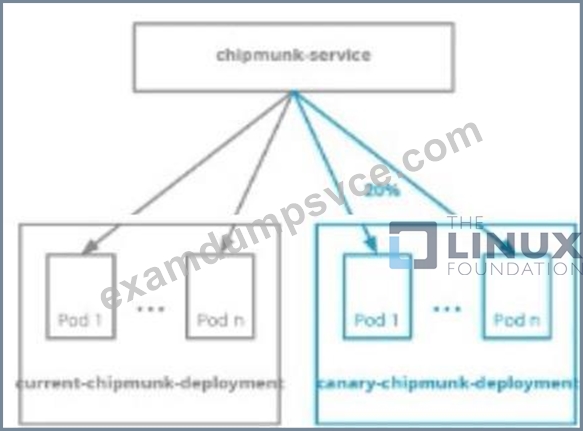
The Service is exposed on NodePort 30000. To test its load- balancing, run
[candidate@ckad00023]
$ curl http://localhost:30000/
or open this URL in the remote desktop's browser.
Answer:
Explanation:
See the Explanation below for complete solution.
Explanation:
ssh ckad00023
You need two outcomes in moose:
* At most 10 Pods total (across both Deployments).
* About 20% of chipmunk-service traffic goes to canary-chipmunk-deployment.
In Kubernetes Services, traffic distribution is (roughly) proportional to the number of ready endpoints behind the Service. So the standard canary trick is:
* total endpoints = 10
* canary endpoints = 2
* current endpoints = 8That gives ~20% to canary.
1) Inspect what exists
kubectl -n moose get deploy
kubectl -n moose get svc chipmunk-service -o wide
kubectl -n moose describe svc chipmunk-service
Get the Service selector (important):
kubectl -n moose get svc chipmunk-service -o jsonpath='{.spec.selector}{"
"}' Check current replicas:
kubectl -n moose get deploy current-chipmunk-deployment -o jsonpath='{.spec.replicas}{"
"}' kubectl -n moose get deploy canary-chipmunk-deployment -o jsonpath='{.spec.replicas}{"
"}' List pods + labels (to confirm both Deployments' pods match the Service selector):
kubectl -n moose get pods --show-labels
2) Ensure both Deployments are behind the Service
This is the key: the pods from BOTH deployments must match the Service selector.
* If the Service selector is something like app=chipmunk, then both Deployments' pod templates must include app: chipmunk.
* If one Deployment doesn't match, patch its pod template labels to match the selector.
2A) Example: selector is app=chipmunk
(Only do this if you see the Service selector contains app=chipmunk and one of the deployments is missing it.) kubectl -n moose patch deploy current-chipmunk-deployment
-p '{"spec":{"template":{"metadata":{"labels":{"app":"chipmunk"}}}}}'
kubectl -n moose patch deploy canary-chipmunk-deployment
-p '{"spec":{"template":{"metadata":{"labels":{"app":"chipmunk"}}}}}'
Wait for rollouts if patches triggered new ReplicaSets:
kubectl -n moose rollout status deploy current-chipmunk-deployment
kubectl -n moose rollout status deploy canary-chipmunk-deployment
Verify endpoints now include pods from both deployments:
kubectl -n moose get endpoints chipmunk-service -o wide
3) Set replicas to enforce "max 10 pods" and "20% canary"
Set:
* current = 8
* canary = 2Total = 10.
kubectl -n moose scale deploy current-chipmunk-deployment --replicas=8
kubectl -n moose scale deploy canary-chipmunk-deployment --replicas=2
Wait until ready:
kubectl -n moose rollout status deploy current-chipmunk-deployment
kubectl -n moose rollout status deploy canary-chipmunk-deployment
Confirm total pods is 10 (or less) and all are Running/Ready:
kubectl -n moose get pods
kubectl -n moose get pods | tail -n +2 | wc -l
Confirm endpoints count matches 10:
kubectl -n moose get endpoints chipmunk-service -o jsonpath='{.subsets[*].addresses[*].ip}' | wc -w
4) Test load balancing via NodePort 30000
Run several times:
for
i in $(seq 1 30); do curl -s http://localhost:30000/; echo; done
You should see canary responses appear roughly ~20% of the time (not exact every run).
If you want a clearer signal, check which pods are endpoints and ensure 2 belong to canary and 8 to current:
kubectl -n moose get pods -l app=chipmunk -o wide
kubectl -n moose get endpoints chipmunk-service -o wide
NEW QUESTION # 123
You are running a critical application that requires high availability and minimal downtime during updates. Your current deployment strategy uses a single Deployment with 3 replicas. You need to ensure that during updates, only one pod is unavailable at any given time, minimizing service disruption. Design a deployment strategy that meets this requirement and allows for seamless updates.
Answer:
Explanation:
See the solution below with Step by Step Explanation.
Explanation:
Solution (Step by Step) :
1. Define Rolling Update Strategy:
- In your Deployment configuration, specify the rolling update strategy with 'maxunavailable: 1 s and 'maxSurge: O'. This ensures that during updates, only one pod is taken down at a time, while the remaining two continue serving traffic.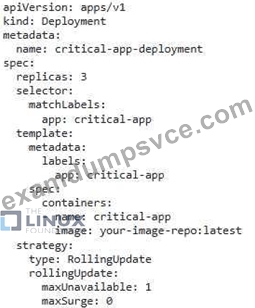
2. Use Liveness and Readiness Probes: - Configure liveness and readiness probes for your application containers. Liveness probes Check tne nealth of running containers and restan them if unhealthy. Readiness probes check if a container is ready to receive traffic. - This ensures that only healthy pods are marked as ready, and traffic is routed only to ready pods.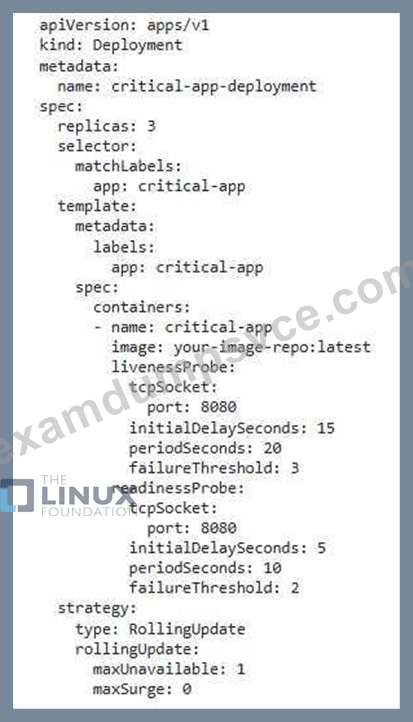
3. Implement Horizontal Pod Autoscaling (HPA): - Set up HPA to automatically scale the number of pods based on CPU or memory utilization- This ensures that the application can handle increased trattiC during updates without compromising performance. - You can configure the desired minimum and maximum replicas for the HPA based on your application's requirements. 4. Use Service with Session Affinity: - Configure your Service to use 'ClientlP' or 'Cookie' session affinity. This ensures that client connections are consistently routed to the same pod during the rolling update, minimizing disruption for users.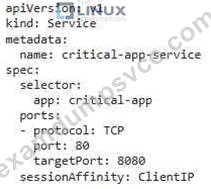
5. Use Daemonsets for System Components: - If you have any system components (like monitoring agents or log collectors) that need to run on every node in the cluster, use DaemonSets instead of Deployments. - DaemonSets ensure that these components are always running on all nodes, even during node restarts or updates, ensuring continuous monitoring and logging.
NEW QUESTION # 124 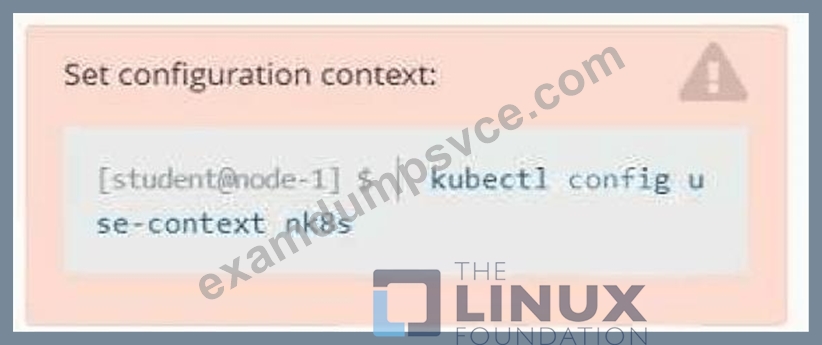
Task
A deployment is falling on the cluster due to an incorrect image being specified. Locate the deployment, and fix the problem.
Answer:
Explanation:
See the solution below
Explanation:
create deploy hello-deploy --image=nginx --dry-run=client -o yaml > hello-deploy.yaml Update deployment image to nginx:1.17.4: kubectl set image deploy/hello-deploy nginx=nginx:1.17.4
NEW QUESTION # 125
Context
Given a container that writes a log file in format A and a container that converts log files from format A to format B, create a deployment that runs both containers such that the log files from the first container are converted by the second container, emitting logs in format B.
Task:
* Create a deployment named deployment-xyz in the default namespace, that:
* Includes a primary
lfccncf/busybox:1 container, named logger-dev
* includes a sidecar Ifccncf/fluentd:v0.12 container, named adapter-zen
* Mounts a shared volume /tmp/log on both containers, which does not persist when the pod is deleted
* Instructs the logger-dev
container to run the command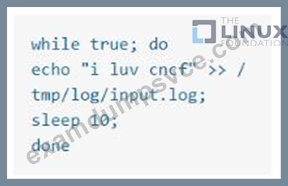
which should output logs to /tmp/log/input.log in plain text format, with example values:
* The adapter-zen sidecar container should read /tmp/log/input.log and output the data to /tmp/log/output.* in Fluentd JSON format. Note that no knowledge of Fluentd is required to complete this task: all you will need to achieve this is to create the ConfigMap from the spec file provided at /opt/KDMC00102/fluentd-configma p.yaml , and mount that ConfigMap to /fluentd/etc in the adapter-zen sidecar container
Answer:
Explanation:
Solution:
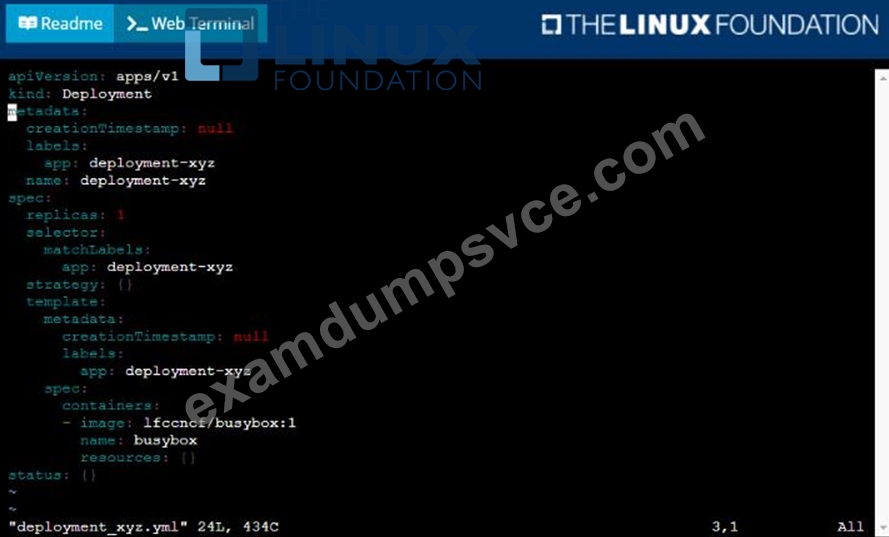
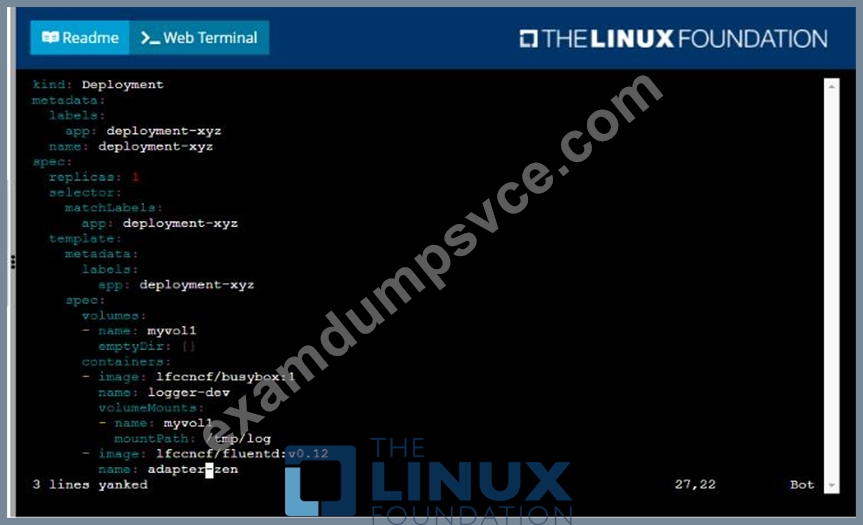
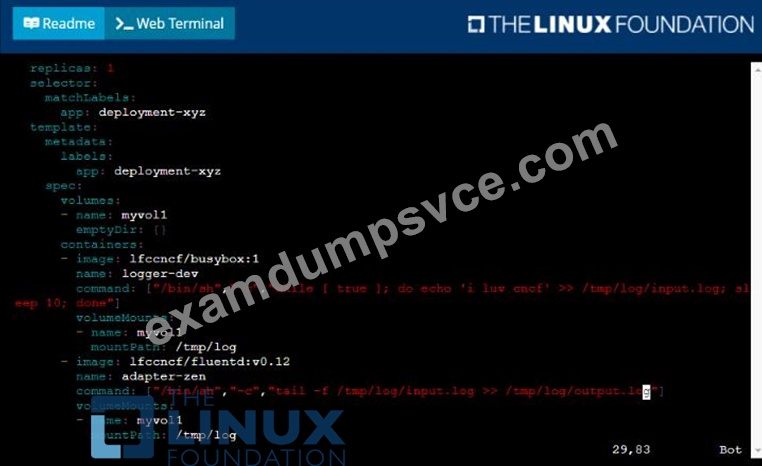
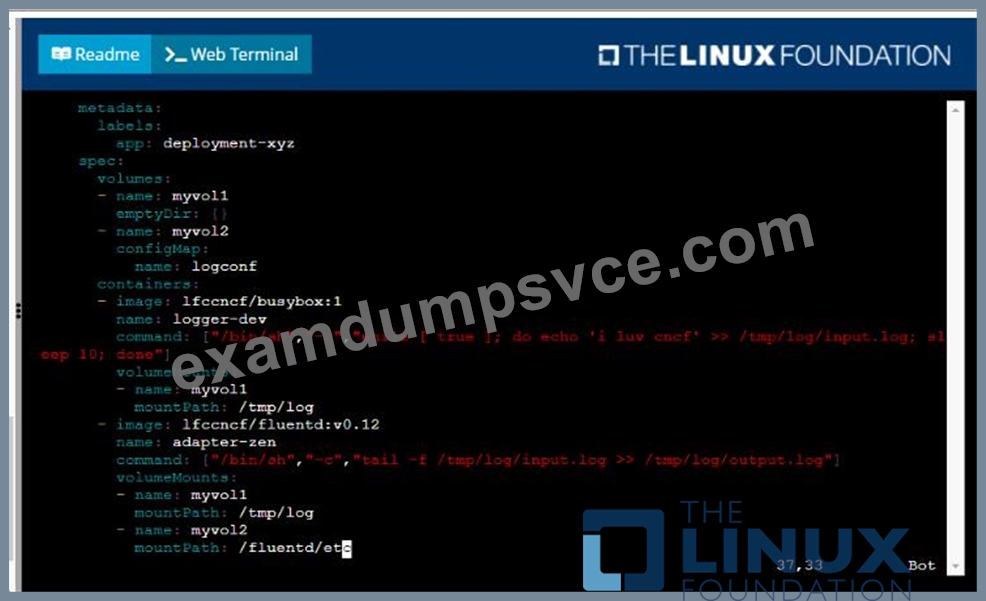
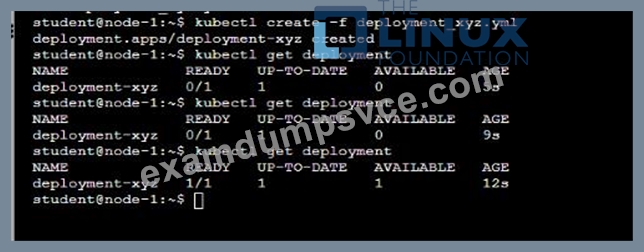
NEW QUESTION # 126
You are building a system for scheduling daily backups of a critical database. The backup process involves running a script that connects to the database, extracts tne data, and saves it to an S3 bucket. How would you utilize Kubernetes JobS to automate this backup process and ensure it runs every day at 2:00 AM?
Answer:
Explanation:
See the solution below with Step by Step Explanation.
Explanation:
Solution (Step by Step) :
1. Create a Job YAML file.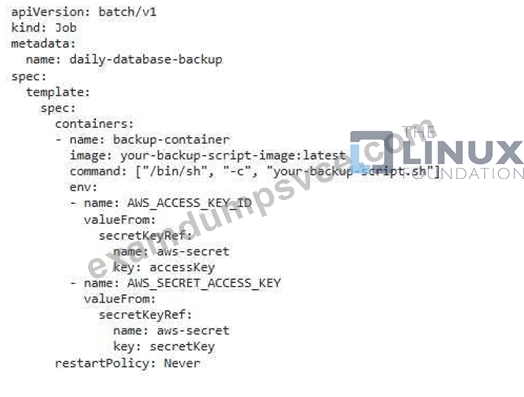
- Replace 'your-backup-script-image:latest With the actual image name of your backup script. - Replace 'your-backup-script.sn' with the actual name Of your backup script. - Replace saws-secret' with the name of the Kubernetes secret holding your AWS credentials (see step 2). - 'restartPolicy: Never ensures the job runs only once. 2. Create a Secret for AWS Credentials: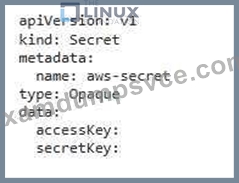
- Replace ''and'' With your actual AWS credentials. 3. Create a CronJob YAML file: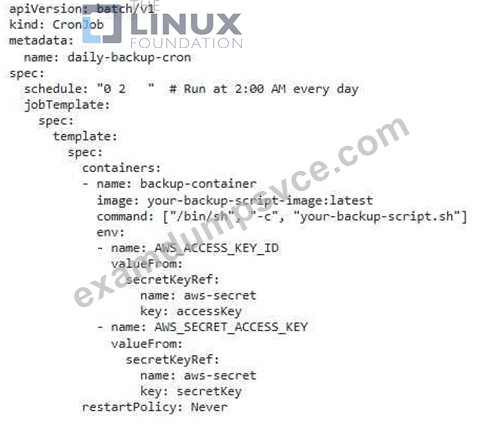
- Adjust the 'schedules to your desired daily execution time. - Ensure the 'jobTemplate' matches the Job YAML definition. 4. Apply the YAML files: - Use 'kubectl apply -f job.yamr and 'kubectl apply -f cronjob.yamr to create the Job and CronJob on your cluster 5. Verify the CronJob: - Use ' kubectl get cronjobs' to check the status of the CronJob- - You should see the CronJob running and triggering the Job at the specified time.
NEW QUESTION # 127
......
We have 24/7 Service Online Support services. If you have any questions about our CKAD guide torrent, you can email or contact us online. We provide professional staff Remote Assistance to solve any problems you may encounter. You will enjoy the targeted services, the patient attitude, and the sweet voice whenever you use CKAD exam torrent. Our service tenet is everything for customers, namely all efforts to make customers satisfied. All of these aim to achieve long term success in market competition, as well as customers’ satisfaction and benefits. 7*24*365 Day Online Intimate Service of CKAD Questions torrent is waiting for you. "Insistently pursuing high quality, everything is for our customers" is our consistent quality principle.
Latest CKAD Test Sample: https://www.examdumpsvce.com/CKAD-valid-exam-dumps.html
- CKAD Exam Forum ???? Practice CKAD Online ???? New CKAD Practice Questions ???? Easily obtain free download of ➥ CKAD ???? by searching on { www.vceengine.com } ????New CKAD Practice Questions
- New CKAD Test Review ???? New CKAD Test Review ???? CKAD Dump Check ???? Open ⮆ www.pdfvce.com ⮄ and search for ✔ CKAD ️✔️ to download exam materials for free ????CKAD Exam Forum
- Pass Guaranteed 2026 CKAD: Perfect Linux Foundation Certified Kubernetes Application Developer Exam Latest Exam Test ???? Search for ⇛ CKAD ⇚ and easily obtain a free download on ➥ www.pdfdumps.com ???? ????Certification CKAD Test Questions
- Marvelous CKAD - Linux Foundation Certified Kubernetes Application Developer Exam Latest Exam Test ???? Easily obtain free download of ⏩ CKAD ⏪ by searching on ▶ www.pdfvce.com ◀ ☘CKAD Test Assessment
- Free PDF Quiz Linux Foundation - CKAD - Fantastic Linux Foundation Certified Kubernetes Application Developer Exam Latest Exam Test ???? Go to website ➥ www.exam4labs.com ???? open and search for ▶ CKAD ◀ to download for free ????CKAD Dump Check
- Hot CKAD Latest Exam Test | Amazing Pass Rate For CKAD: Linux Foundation Certified Kubernetes Application Developer Exam | Free PDF Latest CKAD Test Sample ???? Easily obtain free download of ➤ CKAD ⮘ by searching on ➥ www.pdfvce.com ???? ????CKAD Exam Quick Prep
- Exam CKAD Course ???? Exam CKAD Course ???? CKAD Dump Check ???? Search for ➡ CKAD ️⬅️ and easily obtain a free download on ⇛ www.pdfdumps.com ⇚ ????Practice CKAD Online
- CKAD Test Assessment ???? CKAD Exam Quick Prep ???? Practice CKAD Online ???? Copy URL ➠ www.pdfvce.com ???? open and search for [ CKAD ] to download for free ????CKAD Exam Experience
- 100% Pass CKAD - Updated Linux Foundation Certified Kubernetes Application Developer Exam Latest Exam Test ???? Open ☀ www.troytecdumps.com ️☀️ enter “ CKAD ” and obtain a free download ????Exam CKAD Course
- CKAD Exam Quick Prep ✏ Certification CKAD Test Questions ???? Valid CKAD Test Question ???? Copy URL 【 www.pdfvce.com 】 open and search for ➤ CKAD ⮘ to download for free ????Practice CKAD Online
- Practice CKAD Online ???? CKAD Reliable Braindumps Ppt ???? New CKAD Practice Questions ???? Search for ➤ CKAD ⮘ on ▛ www.examcollectionpass.com ▟ immediately to obtain a free download ????CKAD Exam Forum
- myasuyf395039.wikinewspaper.com, www.stes.tyc.edu.tw, blancheguvk821830.blogs100.com, www.stes.tyc.edu.tw, philipgraa973871.wizzardsblog.com, heidiksnp936509.laowaiblog.com, shaunauewy944851.angelinsblog.com, keithwbng797110.idblogmaker.com, getsocialselling.com, janawzrg536588.slypage.com, Disposable vapes
DOWNLOAD the newest ExamDumpsVCE CKAD PDF dumps from Cloud Storage for free: https://drive.google.com/open?id=1VGtgPd5lyLQmKkZW0JTnWXY1vlJLW9t_
Report this wiki page